# Leveraging Interactive Warehouse Floor Maps in Power BI

Recently, when I worked with my wife to draw her company's Warehouse Floor Map, it was exciting to me. Then, I think about how to show the Warehouse Floor Map as a visualization in the Power BI. That can help my wife track & analyze inventory on hand, finding items by Warehouse Location easily.

Using the Warehouse Floor maps in Power BI can greatly enhance data visualization and analysis for inventory management. Here's a brief outline of my article.

## 1. Source Files

I created a sample Warehouse Floor Map and Sample Dataset which is being used for my instance.

<table><thead><tr><th>File name</th><th data-type="files"></th></tr></thead><tbody><tr><td>Sample Inventory On-hand Data</td><td><a href="https://4233060750-files.gitbook.io/~/files/v0/b/gitbook-x-prod.appspot.com/o/spaces%2FjhtQupP7ACZVtv3cCNCr%2Fuploads%2FV1usj8xIcoTNGnZt6UGy%2FSample_DS.xlsx?alt=media&#x26;token=43c6313e-36a6-4796-9f85-96dbd8e65150">Sample_DS.xlsx</a></td></tr><tr><td>Sample Warehouse Floor Maps (Visio)</td><td><a href="https://4233060750-files.gitbook.io/~/files/v0/b/gitbook-x-prod.appspot.com/o/spaces%2FjhtQupP7ACZVtv3cCNCr%2Fuploads%2FV9aPJXsuxtfvH1ol26am%2FWarehouse_floor_layout.vsdx?alt=media&#x26;token=1b3dcaa1-d49a-4228-a37f-715d89369d15">Warehouse_floor_layout.vsdx</a></td></tr><tr><td>Sample Warehouse Floor Maps (SVG) - <mark style="color:red;">Synoptic Designer</mark></td><td><a href="https://4233060750-files.gitbook.io/~/files/v0/b/gitbook-x-prod.appspot.com/o/spaces%2FjhtQupP7ACZVtv3cCNCr%2Fuploads%2FtuSMIyyRM2Hg5WE2oFOY%2FSynoptic_WH_Floor_Map.svg?alt=media&#x26;token=3d2bb214-e6dd-48d2-b66d-20e2c35c24d6">Synoptic_WH_Floor_Map.svg</a></td></tr><tr><td>Sample - Power BI report file</td><td><a href="https://4233060750-files.gitbook.io/~/files/v0/b/gitbook-x-prod.appspot.com/o/spaces%2FjhtQupP7ACZVtv3cCNCr%2Fuploads%2Frs6huIDCtNhUR13osDtp%2Fsample_power_bi_warehouse.pbix?alt=media&#x26;token=fad6cfa7-dc2a-48ba-b88f-3c0ce0e46615">sample_power_bi_warehouse.pbix</a></td></tr></tbody></table>

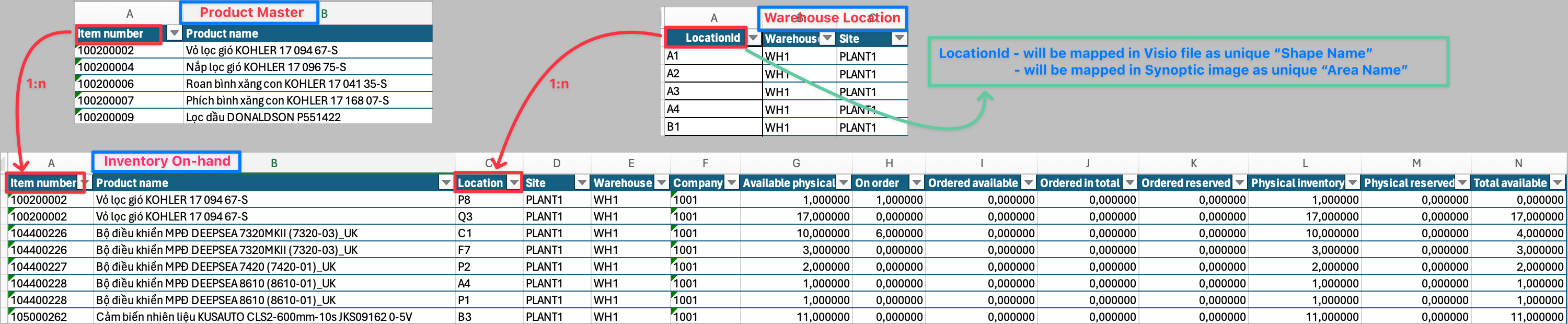
Now, I will describe my data sample - file "**Sampe\_DS.xlsx"**

<figure><img src="https://4233060750-files.gitbook.io/~/files/v0/b/gitbook-x-prod.appspot.com/o/spaces%2FjhtQupP7ACZVtv3cCNCr%2Fuploads%2FQdJ9JzqMbUus4hPDpqrU%2Fimage.png?alt=media&#x26;token=9d7d132f-69c2-4cc7-a2ac-a8a09abc34fc" alt=""><figcaption><p>Overview - Sample Data</p></figcaption></figure>

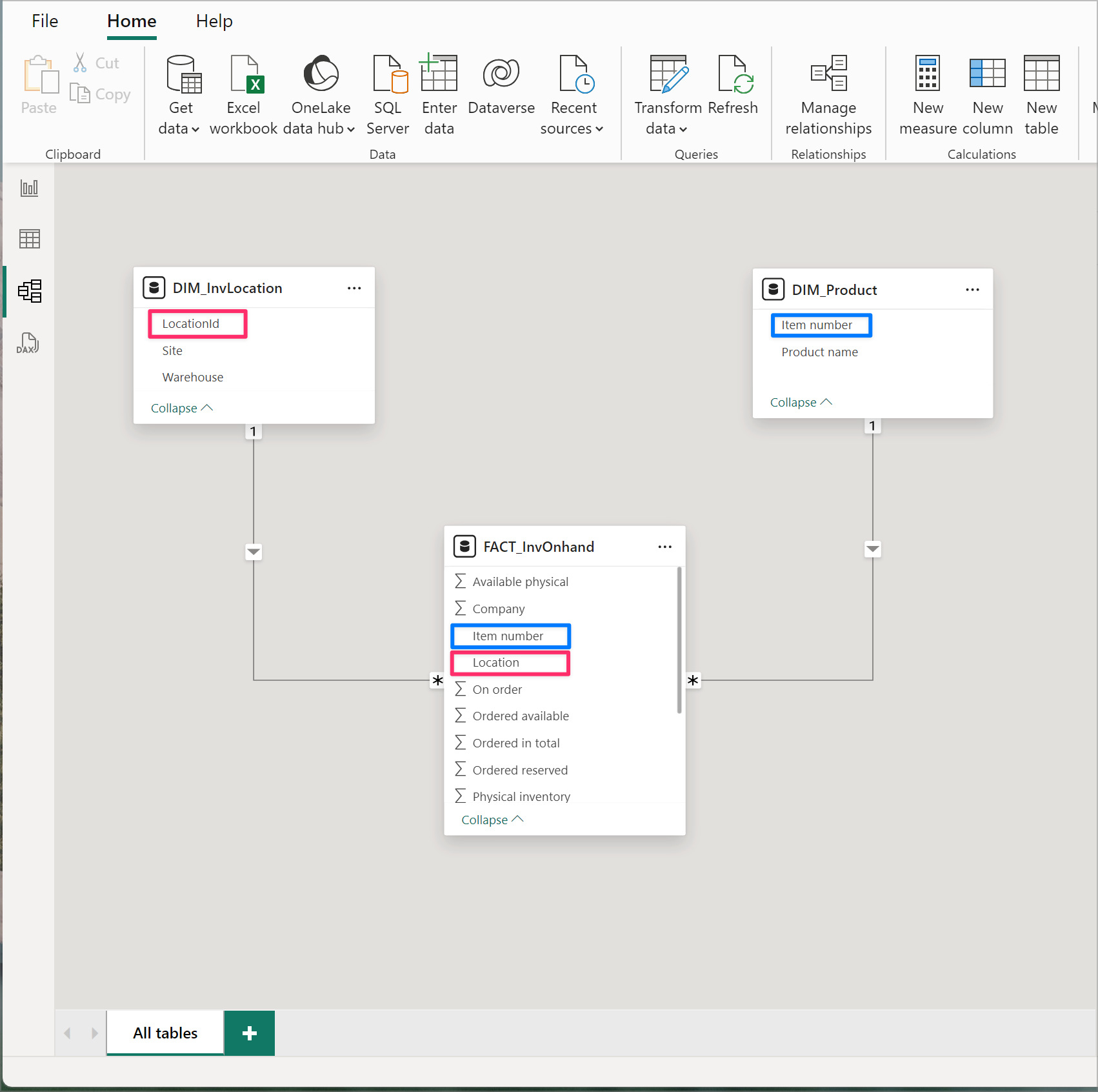
Data Model in Power BI:

<figure><img src="https://4233060750-files.gitbook.io/~/files/v0/b/gitbook-x-prod.appspot.com/o/spaces%2FjhtQupP7ACZVtv3cCNCr%2Fuploads%2F8RmZlBksw99e3b8tHM9P%2FCleanShot%202024-05-02%20at%2008.53.42%402x.png?alt=media&#x26;token=4abf7544-71af-406e-a7f9-a74ffbbc1e23" alt="" width="563"><figcaption><p>Power BI - Data Model</p></figcaption></figure>

## 2. Make a Warehouse Floor Map design for Power BI

In the Power BI, I found and used 2 visuals to make it.

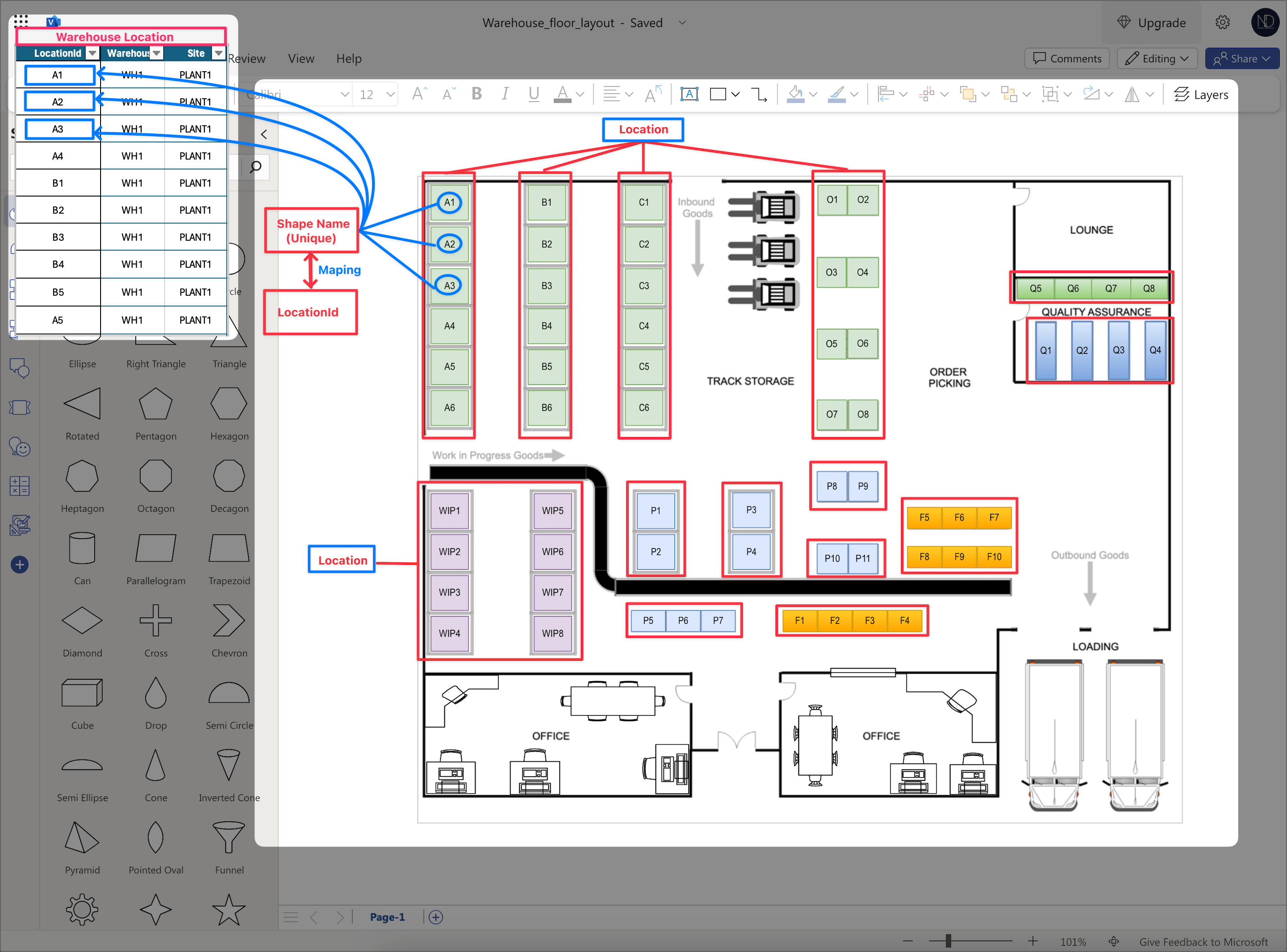
* [Visio Visual](https://appsource.microsoft.com/en-us/product/power-bi-visuals/WA104381132): You must create the Warehouse Floor Map Visio file\
  Sample Visio file for "Warehouse Floor Map" - each warehouse location is a <mark style="color:red;">**Shape with a unique Name.**</mark> This Shape Name will be used to map with the Warehouse Location in the data source file ***"Sample\_DS.xlsx"***<br>

  <figure><img src="https://4233060750-files.gitbook.io/~/files/v0/b/gitbook-x-prod.appspot.com/o/spaces%2FjhtQupP7ACZVtv3cCNCr%2Fuploads%2Fi0Iz0qXq8Llj0d6ItP4y%2F_Visio_wh_floor_map_design.png?alt=media&#x26;token=ad4f583a-46bd-46ea-b93b-e3e880938ecf" alt=""><figcaption><p>Visio Design - Warehouse Floor Map</p></figcaption></figure>

  \
  \&#xNAN;*<mark style="color:red;">**Important:**</mark>* *Ensure that the **Visio shapes** that you want to link to Power BI data within your diagram have **unique text.***

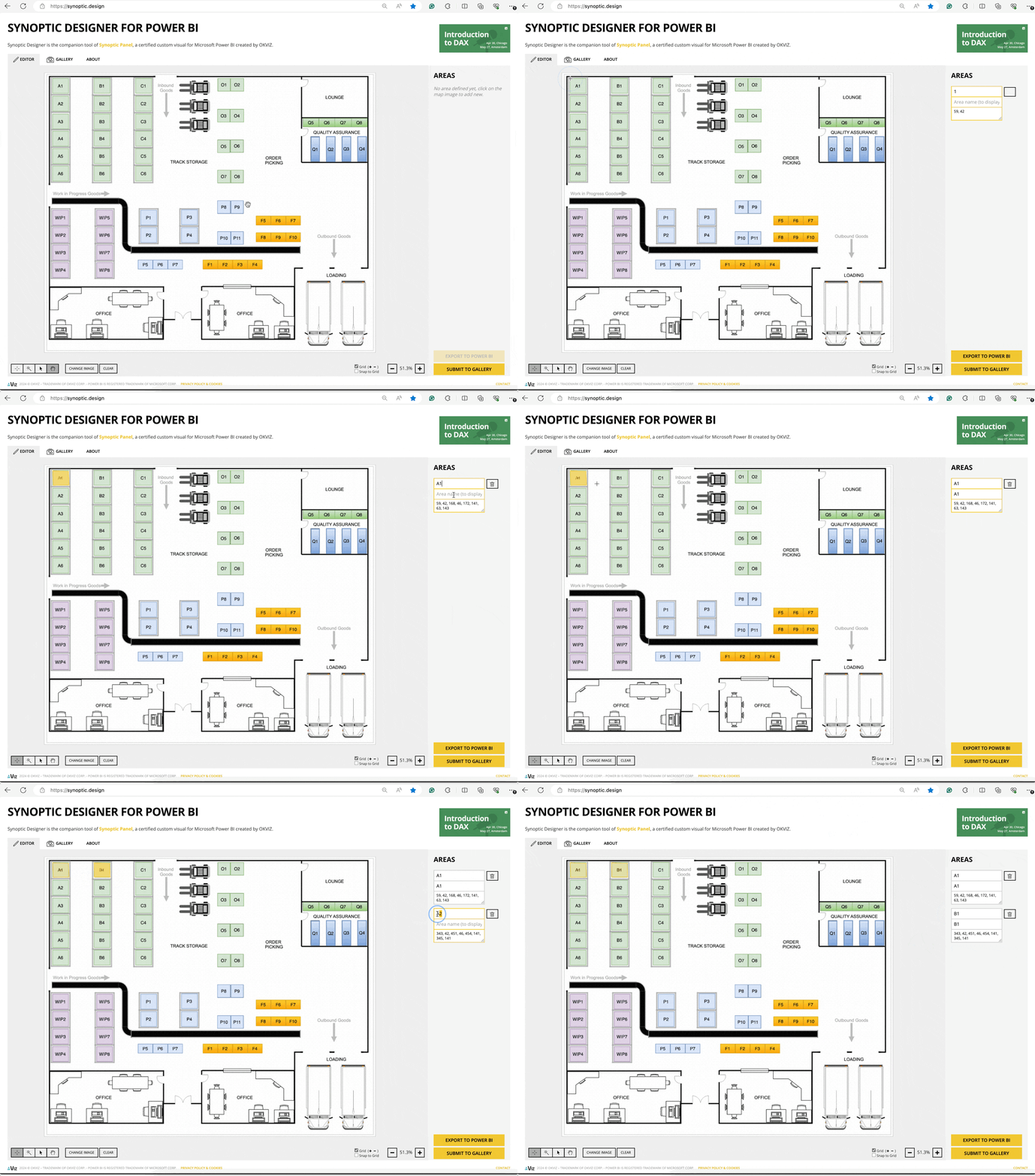
* [Synoptic Visual](https://appsource.microsoft.com/en-us/product/power-bi-visuals/WA104380873): You must make some areas for the Warehouse Floor Map image by using the Synoptic Designer at the link <https://synoptic.design/>.\
  \ <mark style="color:red;background-color:green;">**How to make an area for any image by Synoptic Designer?**</mark><br>

  <figure><img src="https://4233060750-files.gitbook.io/~/files/v0/b/gitbook-x-prod.appspot.com/o/spaces%2FjhtQupP7ACZVtv3cCNCr%2Fuploads%2FcyC18jQt2z4qU0pblqWP%2F_area_editor_synopticDesigner.gif?alt=media&#x26;token=0be62f21-0ff0-4f5c-bba1-d113a096efb0" alt=""><figcaption><p>Make Area for Warehouse Location by Synoptic Designer</p></figcaption></figure>

  \
  *<mark style="color:red;">**Important:**</mark>* *Ensure that the **Area name** that you want to link to Power BI data within your image has **unique value.***

## 3. Create a Power BI report

## 3.1 Using Visio Visual

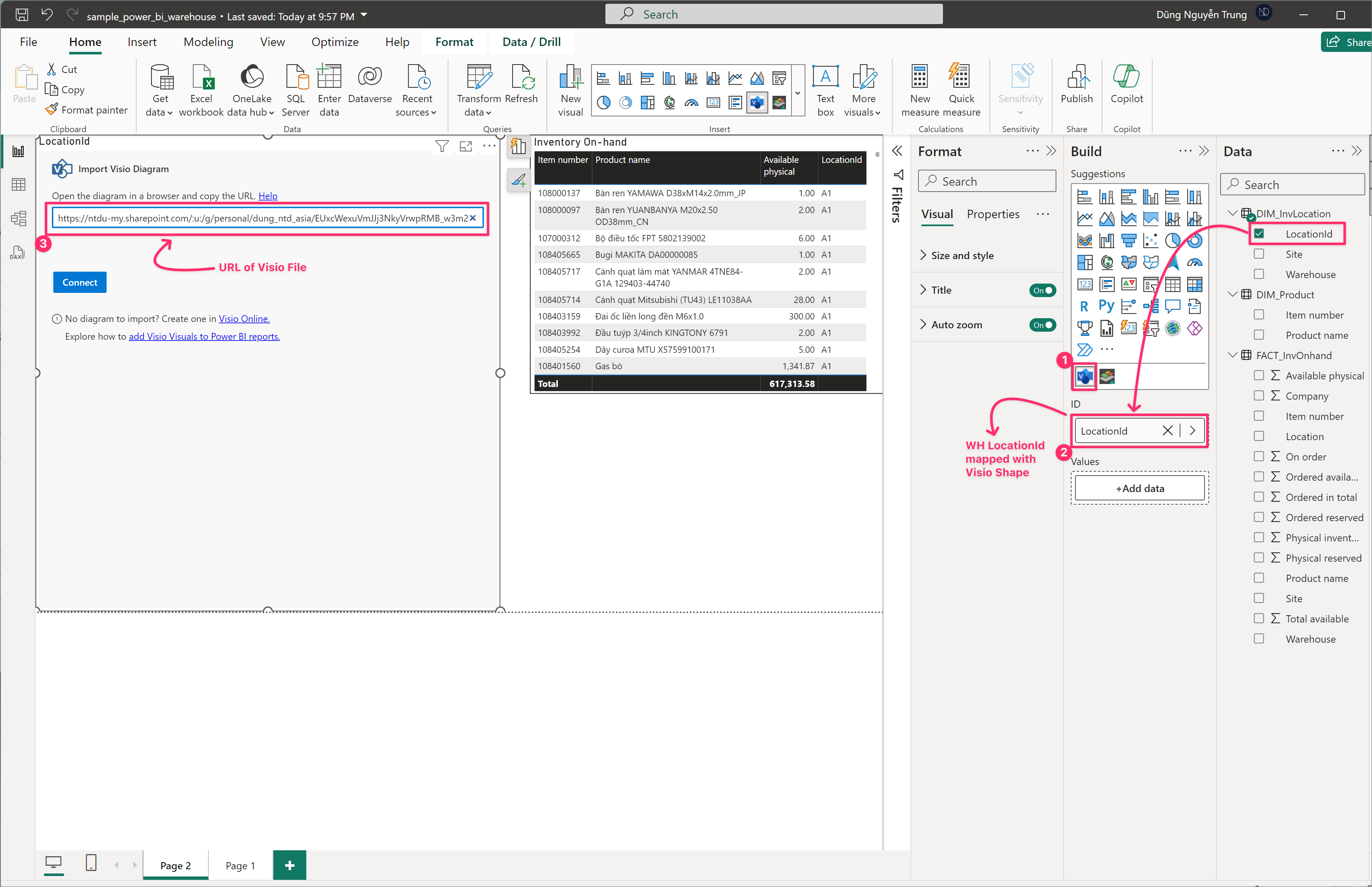
You must get Visio Visual first ***( ... > Get more visuals > Visio Visual).*** After that, we add this Viso Visual to the Report page and configure it as the image below.

<figure><img src="https://4233060750-files.gitbook.io/~/files/v0/b/gitbook-x-prod.appspot.com/o/spaces%2FjhtQupP7ACZVtv3cCNCr%2Fuploads%2FN0fiKl6WXJvTHJcLuIm4%2FCleanShot%202024-05-01%20at%2023.03.49%402x.png?alt=media&#x26;token=45eabded-1782-4f46-9584-d9d487be3d25" alt=""><figcaption><p>Add Visio Visual in Power BI</p></figcaption></figure>

{% hint style="info" %}
Due to the Visio Visual connecting exclusively through URL, it's necessary to upload the completed Visio File to a cloud service (e.g., SharePoint, OneDrive) upon design completion.
{% endhint %}

**Configuration:**

{% embed url="<https://youtu.be/hBMjMOE9-nk>" %}
Add - Visio Visual
{% endembed %}

### 3.2 Add Synoptic Panel visual

Now we move to configure on another Visual - **Synoptic Panel.**

**Configuration:**

{% embed url="<https://youtu.be/1rXI1qyfYyA>" %}
Add - Synoptic Visual
{% endembed %}

That's all for my ideas.&#x20;

Thank you for watching & Hoping well! ... :goal::tada:\
\&#xNAN;**\[NTD]yns.asia**